
The CRM and ERP Trap: Why They Break Under Funding Management (+ The Better Solution)
11th December 2025
5 min read
by Taru Bhargav

It’s the vision enterprise platforms have promised for years. And if you’re deep in digital transformation, the idea of managing everything under one umbrella, without fragmented workflows or disjointed data, can feel like a shortcut to clarity.
But here’s the uncomfortable question: can a system built for commercial ops really handle the layered, policy-driven world of funding?
Funding isn’t just another workflow; it’s conditional, multi-stakeholder, and audit-heavy. CRMs and ERPs weren’t designed for it, and it shows. Workarounds pile up. Teams build duct-tape solutions just to keep things moving.
So if you’re stuck customising a system that still can’t flex or forced to compromise your delivery model just to make the tech work – this article is for you.
It breaks down:
– Why CRMs and ERPs crack under the weight of funding logic
– The hidden operational and compliance risks no one talks about
– And what smarter, purpose-built platforms are doing differently
Because if your tech can’t keep up with your funding strategy, it’s time to rethink the foundation.
Why funding management isn’t just another business workflow
On paper, funding management might look like just another workflow (one that could easily slot into a CRM or ERP like Salesforce or Microsoft Dynamics). You’ve got contacts, funding sources, milestones, approvals, and reporting. So solid funding management project tools are needed. What’s so different from a sales pipeline or project tracker?
Quite a lot, actually.
Unlike linear business workflows, funding management operates in tandem with program management, where you’re not just tracking money, but how that money delivers outcomes through specific programs. This dual requirement means managing both program logic (eligibility rules, delivery milestones, outcome measures) and funding flows (multi-source budgets, conditional payments, compliance requirements) within a single unified system.
These interconnected workflows are cyclical, compliance-heavy, and often multi-year in nature. They involve multiple rounds of stakeholder engagement, conditional funding tied to performance evidence, complex approval logic, and impact indicators that must be captured and reported transparently to both internal and external audiences.
This complexity is not a niche challenge. It’s a foundational issue when public, not-for-profit, or grant-funded teams are forced to retrofit commercial tools to fit impact-first delivery models.
Where cracks start to show
Most CRM platforms weren’t designed to manage community outcomes, conditional milestones, multi-stakeholder funding reviews or program delivery logic. The further these systems are stretched, the more expensive, fragile, and unsustainable the implementation becomes over time.
Purpose-built funding platforms may require significant configuration upfront, but it’s a configuration that understands the sector’s needs from day one. Instead of forcing square pegs into round holes, these platforms come with the right architecture to handle both program management and funding workflows together.
This is exactly why vertical SaaS platforms (designed for specific industries like funding and grants) are outpacing horizontal software and growing at 12.3% to 15.2% through 2034, significantly outpacing enterprise software’s 9.6% projected growth, as specialised tools deliver better outcomes with preconfigured domain logic and sector-aligned workflows.
Even more critically, generic CRMs you don’t start with best practices pre-configured for your sector. You’re often rebuilding what others have solved a dozen times before—absorbing the cost and complexity in-house. And while many enterprise CRMs now support role-based access and audit trails, those capabilities don’t close the gap when you’re trying to model multi-source funding, conditional payments, stakeholder portals, or evidence-linked KPIs in one cohesive system.
As a16z – a prominent venture capital firm – adds “ With the right solution, many businesses consuming VSaaS can dramatically reduce internal and external labor spend on sales, marketing, customer service, operations, and finance. This should further increase the take rate of VSaaS companies by an additional 2-10x.”
What we’ve observed is that the more layered the funding requirements, the more effort it takes to keep CRM platforms aligned with actual operational needs.
This isn’t a critique of the platforms themselves. CRMs have been designed to manage customers and commercial pipelines. But when they’re stretched to accommodate funding models, policy obligations, audit workflows, and multi-year program delivery, they begin to show structural limitations.
What happens in practice when not using purpose-built funding project management tools
The story often unfolds like this:
| Stage | What’s happening | Business impact |
| Month 1–3 | Initial rollout begins. Teams use off-the-shelf CRM workflows with minor tweaks. Confidence is high. | 0–3 months lost in sunk configuration time before true needs surface. |
| Month 4–6 | Gaps start to show. Teams can’t track conditional milestones linked to program outcomes. The system can’t handle the relationship between program delivery and funding releases. | Manual reporting adds 10–15 hours/month per team, increasing compliance risk. |
| Month 7–9 | Consultants are brought in to build custom objects, logic, and integrations. Budgets expand. Timelines stretch. | Consulting costs often exceed $50k, while internal delivery timelines double. |
| Month 10+ | Policy changes hit. Configurations need updates. Teams revert to spreadsheets for speed. Frustration grows. | Reversion to spreadsheets undoes months of system investment. Team trust erodes. High likelihood of audit gaps. |
The patterns above reflect what we’ve consistently seen in the field and heard in conversations with transformation leaders and program managers who’ve lived through the consequences.
Nik Vassilev, General Manager at Tactiv echoes the sentiment:
“It’s a pattern we see time and again, teams start with confidence in their implementation, but once reporting, compliance, and policy changes kick in, the cracks appear fast. By the time we speak with most organisations in this position, they’ve already poured months of effort into configuring a CRM, only to find it can’t capture the complexity, compliance, and cyclical nature of real-world funding workflows.”
Below, we’ve unpacked the four most common pressure points that show up when CRMs are pushed beyond their original purpose.
CRMs weren’t built to handle program logic
Enterprise CRMs assume a world of fixed record types, automations triggered by status changes, and relatively linear flows. When you press them into service for funding programs, the cracks start to widen.
- Take conditional disbursement, for example. Within a funding program, you might want to release 50 % at milestone A, another 30 % only if evidence passes, and hold the final 20 % until reporting is complete. In a CRM, there is no native mechanism to express that logic. The end result? Teams force-fit approvals into deal stages or build custom scripts, and every time that logic changes, the system breaks.
- Another example is that of program amendments. Suppose a grantee requests a variation midstream. You now need branching logic: accept, reject, modify, re-approve, and all of that tied to the original funding record, with historical traceability. CRMs can’t do that natively. They weren’t designed to handle nested program versions.
In practice, multiple organisations have told us they had to create parallel “shadow systems” just to track evidence, approve variations, and manage policy exceptions. Their CRM remained a frontend for status updates only, while the real program logic lived in spreadsheets, SharePoint folders, or offline approval trails.
It’s a pattern that reflects a broader industry trend and it’s a sharp contrast with funding project management tools. Forrester’s data shows that while CRM platforms are widely adopted, user satisfaction drops significantly when they’re stretched beyond their core sales or customer service use cases. This gap between adoption and effectiveness is especially stark in compliance-heavy domains like funding.
Endless customisation, limited results
According to the Standish Group, nearly 70% of software projects exceed time and cost expectations, and over 60% of CRM initiatives run over budget – most commonly due to integration and customisation hurdles.
McKinsey similarly reports that large IT projects exceed budgets by an average of 45%, with customisation and technical complexity as key drivers.
We’ve seen this play out repeatedly in funding environments. What begins as a few “tweaks” to a CRM i.e. adding fields, building bespoke approval chains, or modifying contact records to act as grantees which quickly escalates into a full-scale development project.
The deeper the funding logic, the more brittle the setup becomes:
- Every new program stream demands additional layers of logic and conditional rules.
- Teams end up creating workaround forms or duplicating data across shadow systems.
- Minor changes (like altering milestone sequencing) require backend developer time.
- Policy updates spark unexpected breakages in the workflow, stalling delivery.
In theory, CRMs offer flexibility. But in practice, that flexibility demands constant upkeep. Configuration becomes its own job function, diverting resources from actual funding delivery. And as technical debt mounts, so does operational fragility – every workflow feels like it’s held together with duct tape and goodwill.
Reporting gaps and compliance risks
Generic CRMs rarely go beyond capturing activity-level data. But in funding environments, teams need to surface whether programs are working – across regions, objectives, and funder requirements.
Say you’re managing a regional infrastructure program. You’ll likely need to track how funds support job creation, local supplier use, environmental standards, and long-term community outcomes, not just whether a milestone was marked complete. That requires defining indicators from the outset, aligning outputs with goals, and collecting outcome data from partners in real time.
Most CRMs weren’t designed for that. So instead:
- Milestones are marked complete without linked evidence or KPI updates
- Reports are inconsistent, relying on manual templates or backdated inputs
- Data is hard to filter by program, objective, or funder requirement
- Approval records, stakeholder updates, and document versions live in separate systems
These gaps undermine the clarity teams need to show value and meet compliance obligations. In Australia, EY’s audit inspection report for 2021–22 recorded “negative findings” in 15% of key audit areas – evidence that even large-scale systems fall short on traceability and structured reporting.
Purpose-built funding project management tools handle this differently. With Tactiv’s platform Enquire for example, teams can configure their own evaluation criteria, connect project-level data to program KPIs, and share performance dashboards with funders and delivery partners. Outcome reporting becomes part of the workflow, not a scramble at the end.
Hard to scale, harder to reverse
You’ve sunk the time, the budget, and the training. So when the system starts holding you back, most teams don’t pivot; they push through.
Once a CRM or ERP has been heavily customised to manage funding programs, it’s not easy to unwind. Even when the cracks start to show, it often feels riskier to rip it out than to keep patching it. You’re dealing with months of configuration, external consultants on speed dial, and internal teams who’ve already climbed a steep learning curve.
Over time, the signs compound:
- Teams hesitate to improve delivery models because the CRM can’t adapt quickly enough.
- Each new funding stream demands weeks (or months) of reconfiguration.
- Policy changes trigger cascading workflow failures.
- New staff face steep onboarding due to layers of custom rules and undocumented workarounds.
And when change fatigue kicks in, it’s even harder to justify a switch. Recent data from Prosci shows that 75% of organisations are already at or beyond their change saturation point.
The truth is that the tolerance for “yet another rebuild” just isn’t there, and decisions start being made based on what the CRM can handle, not what the funding program requires. And the longer this continues, the more difficult it becomes to rectify the situation.
The result? Teams stay put, even when the system is no longer fit for purpose.
What purpose-built funding project management tools do differently
We’ve seen how generic platforms struggle under the weight of real-world funding complexity. But purpose-built funding management tools offer a more sustainable path forward – especially for teams navigating multi-year, multi-stream, compliance-heavy programs.
These tools aren’t just a better fit. They’re designed specifically for funding delivery, bringing together logic, workflows, and auditability in ways retrofitted CRMs can’t replicate.
Funding-first design logic
Funding programs don’t follow a straight line, and purpose-built funding project management tools don’t expect them to. Instead of forcing your workflow into a sales pipeline or project tracker, these platforms are architected around how funding actually works.
That means:
- Programs and sub-programs with distinct conditions, not static deals
- Milestones linked to evidence and eligibility checks, not stage changes
- Conditional logic baked into approvals, disbursements, and compliance tasks
- Flexible workflows that support both internal policy and external stakeholder needs
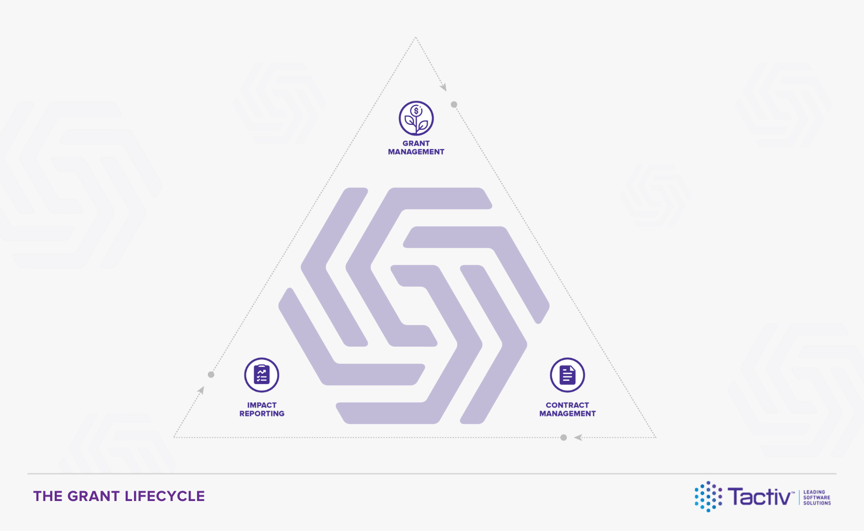
Whether you’re running grants, innovation incentives, or sector-specific funding schemes, the platform reflects the actual lifecycle you’re managing, not a sales pipeline in disguise.
Faster implementation, lower long-term cost
Customising a CRM or ERP to manage funding can take months and cost six figures. Purpose-built funding project management tools sidestep that entirely.
Because core funding functions come ready to deploy like assessment workflows, document tracking, grantor-recipient views, and program templates, teams can launch in weeks, not quarters.
You also avoid the hidden costs, such as patchwork workarounds, rising consultant hours, and developer bottlenecks that often come with generic platforms. With a purpose-built system, your budget goes toward delivery – not duct-taping together a half-fit tool.
Better compliance and audit-readiness
Funding programs demand proof of eligibility, approvals, disbursements, and impact. Purpose-built funding project project tools track this automatically. Every milestone update, evidence submission, and decision is time-stamped, versioned, and associated with the correct user.
No more piecing together emails, spreadsheets, and CRM notes during audit season. The system creates an auditable trail by default, not as an afterthought.
Features such as automated notifications, permission-based access, and real-time logs ensure that internal teams and external reviewers are always working from the same source of truth.
Designed to scale as complexity grows
Generic systems often struggle to keep up as demand grows. Scaling usually means duct-taping on new modules, duplicating forms, or bending existing workflows beyond recognition. The result? A fragile setup that creaks under pressure and breaks when new needs emerge.
Purpose-built platforms are architected for this complexity from day one. You can:
- Add new funding streams or program types—without rewriting business logic or duplicating workflows
- Configure delivery models by department, funding source, or jurisdiction, each with tailored permissions, milestones, and evidence requirements
- Enable both internal and external users—grantors, recipients, reviewers—with role-specific interfaces and access controls
- Report across all programs, aggregating data where needed while maintaining the integrity of each stream’s rules and audit requirements
Instead of creating parallel systems or bottlenecking every change through IT, your team can confidently evolve its funding strategy while supporting the future of your portfolio.
➔ Why scalability is essential for the future success of your funding programs
Integrates with your existing ecosystem
And finally, if you thought adopting a purpose-built funding management tool meant ripping out your CRM or ERP—think again. The goal isn’t to replace what works. It’s to fill the gaps generic systems can’t.
These platforms don’t operate in a silo. They plug into your existing ecosystem to give you a complete picture of your funding operations, without duplicating effort or creating data silos. This way you can:
-
Sync with CRMs like Salesforce or Dynamics to surface funding milestones and program statuses alongside relationship data
-
Connect with finance systems to streamline eligibility checks, disbursements, and budget tracking
-
Push data into your BI tools to create live dashboards without manual exports or reconciliation headaches
Essentially, you keep the systems that serve their purpose, and let the funding tool do what it was built to do. The result? One cohesive, connected view of your funding lifecycle that doesn’t require compromise.
Ready to explore true digital transformation with the right funding project management tools?
If any of this feels familiar (the fragile workflows, the endless configuration cycles, the reporting gaps), you’re not imagining it. We’ve seen how hard teams work just to make CRMs and ERPs almost fit their funding needs.
But you shouldn’t have to bend your delivery model to suit your system. Purpose-built funding management platforms give you the structure, auditability, and scale your programs demand, without the trade-offs. They’re built for funding from day one.
If you’re ready to see how a platform designed for funding can help you streamline programs, reduce delivery risk, and future-proof your operations, book a demo with our team, and we’ll show you how we can help your programs – today, and as they grow.
Impact measurement health check
How well are you measuring your impact? Take our FREE 5-min health check to find out