Grant Management in Singapore: What Sets It Apart and How Organisations Can Thrive
18th January 2026
5 min read
by Tara Endenburg

What Does Grant Management in Singapore Look Like?
For organisations navigating grant management in Singapore, understanding the unique characteristics of its landscape is essential to operating effectively and staying ahead of rising expectations.
Government-Led Ecosystem and Policy Alignment
Unlike many countries where grantmaking is distributed across philanthropic foundations, corporate trusts, and decentralised community funders, Singapore’s landscape is led primarily by government ministries and statutory boards. As a result, grant programs are deeply aligned with national strategies. This ranges from digitalisation and green initiatives to social cohesion, early childhood development, and active ageing.
This creates a high degree of policy coherence, clear strategic direction, and strong cross-agency coordination. It also means that organisations must be ready to respond to evolving national priorities. They must remain closely attuned to shifts in policy direction, as grant criteria and outcomes often reflect emerging government strategies.
➔ Want to read more about government grant management in Singapore? Get into this deep-dive
High Accountability and Regulatory Expectations
Grant management in Singapore is grounded in a strong culture of accountability, supported by robust regulatory frameworks. Recipients are expected to demonstrate sound governance, reliably track outcomes, and use funds transparently. Reporting requirements are well-defined, with clear expectations around data quality, progress measurement, and stewardship of public resources.
Yet Singapore balances this with efficiency and trust. Processes are designed to minimise unnecessary burden while ensuring that performance and compliance remain high. This combination of strict governance, paired with clarity and support, sets Singapore apart from many international systems where grant oversight can be either overly bureaucratic or inconsistently enforced.
Strong Focus on Measurable Impact and National Outcomes
Singapore places exceptional emphasis on measurable impact, with grant programs often tied to outcomes that contribute to larger national objectives. Therefore, funders expect evidence of change, not just activity, and many programs are designed with explicit logic models or results frameworks built in.
This impact-focused design provides greater clarity in evaluation and ensures that grant programs collectively push toward broad societal outcomes, whether in health, environmental sustainability, workforce development, or social services. The emphasis on evidence and results is more pronounced than in many countries. These grants may support advocacy, experimentation, or diverse funder-driven missions, but without a unified national direction.
Centralised, (Relatively) Small Nonprofit Sector
Singapore’s nonprofit sector is smaller and more closely connected than those in many larger countries. With strong umbrella bodies and sector-wide initiatives, best practices in governance, reporting, and evaluation spread quickly. Additionally, collaboration is often encouraged, and organisations tend to operate within a coherent set of expectations and norms.
Singapore’s role as a convening hub for philanthropy and cross-sector collaboration in Asia reinforces this connectivity, with initiatives such as the Philanthropy Asia Alliance promoting shared learning, collective action, and ecosystem-level impact across the region (https://www.philanthropyasiaalliance.org/home).
This scale and connectivity make Singapore uniquely well-suited for the adoption of shared systems and streamlined processes. Improvements in grant management – whether in data collection, reporting, or inter-organisational coordination – generate sector-wide benefits more quickly than in more fragmented environments.
Efficiency-Centric Administrative Culture
Efficiency is a hallmark of Singapore’s public sector, and this ethos extends to grant management. Agencies focus on timely decision-making, user-friendly processes, and reducing administrative overhead. Digital transformation is a national priority, and grantmaking workflows are increasingly expected to be automated, transparent, and seamless.
Globally, digital public infrastructure and technology-enabled grant administration are recognised as key enablers of efficiency, better governance, and improved user experience in funding systems (https://www.worldbank.org/en/topic/digitaldevelopment).
As grant programs have expanded in number and complexity, manual processes and spreadsheet-driven systems have become less practical. Singapore’s administrative culture creates strong incentives to adopt technology that not only improves efficiency but also strengthens governance and enhances the user experience for applicants and recipients.
➔ Interested in connecting with the grant management sector in Singapore? Check out this fund management event calendar for events in Asia [2026 event calendar]
How Digital Solutions Like Tactiv’s Enquire Support Organisations in Singapore
In this environment – coordinated, impact-driven, and efficiency-focused – modern digital grant management platforms play a crucial role. Solutions like Tactiv’s platform Enquire help organisations streamline applications, automate workflows, consolidate data, and produce high-quality impact reporting without unnecessary administrative strain.
Additionally, the flexibility of a digital system allows for adapting to changing national regulations and direction. Tactiv’s platform offers an end-to-end system that supports transparency, real-time information sharing, and continuous program improvement. This enables agencies, nonprofits, and foundations to meet Singapore’s high standards while freeing up time and resources to focus on mission delivery.
For organisations operating within the unique dynamics of grant management in Singapore, digital transformation is no longer optional. It is a strategic enabler of better governance, stronger impact, and long-term sustainability.
Want to find out more about Tactiv’s platform Enquire and how it can help you thrive in Singapore’s grant management landscape?
Request a demo – no strings attached – or read more about the platform here.
Impact measurement health check
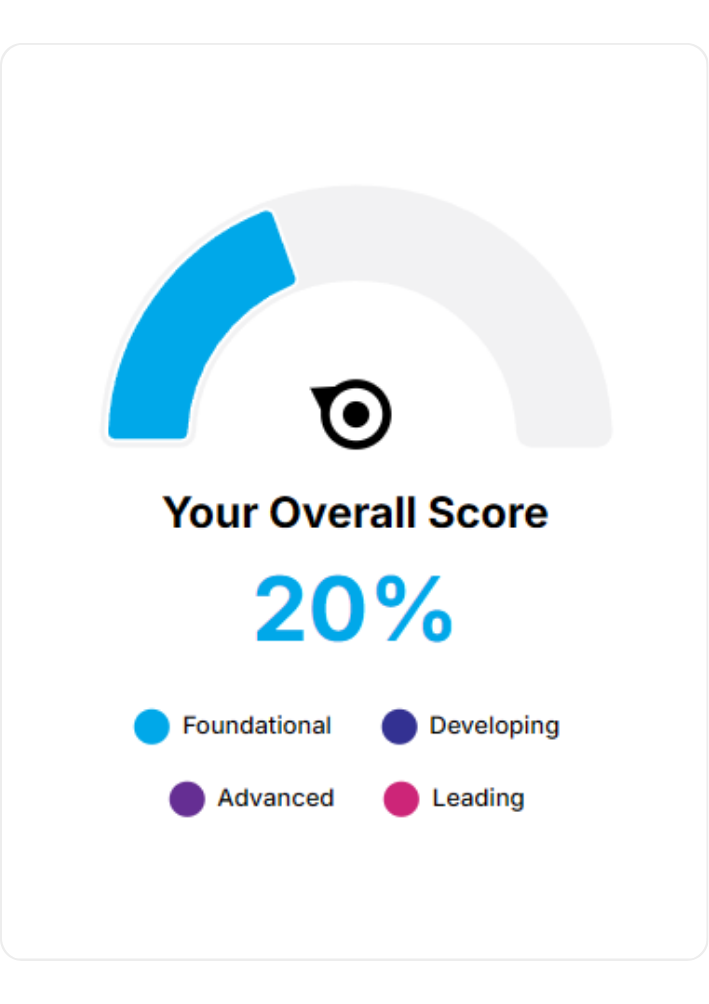
How well are you measuring your impact? Take our FREE 5-min health check to find out