
Nonprofit Developments in 2026: Operating in a New Economic Reality
19th May 2026
5 min read
by Tara Endenburg

From Adoption to Pressure-Driven Maturity
The nonprofit sector has spent the better part of the last decade adapting to change. Digital tools were introduced, funding models diversified, and organisations began experimenting with new ways of working. In 2026, that phase is over.
The tools, strategies, and ideas that once defined “transformation” are now baseline expectations. Nonprofits are no longer asking whether to adopt digital systems, improve reporting, or rethink funding - they are expected to already be doing so. At the same time, the environment in which nonprofits operate has fundamentally shifted. Supported by the themes for the 2026 Philanthropy Australia Conference, across Australia, New Zealand, and Asia, organisations are facing a more complex and constrained reality:
- Demand for services continues to rise across communities
- Funding is less predictable, with increasing pressure on both public and private sources
- Donor participation is evolving, with fewer but more selective contributors
- Expectations for transparency, accountability, and measurable impact are higher than ever
This combination creates a defining characteristic of the sector in 2026: maturity under pressure.
More importantly, this maturity is not evenly distributed. While some organisations are leveraging data, automation, and sophisticated funding strategies, many others - particularly smaller nonprofits - are still working to keep pace under tightening constraints.
Against this backdrop, several key nonprofit developments are shaping how organisations operate, allocate funding, and deliver impact in 2026. Let's dive deeper into these developments.
1. Financial Resilience Has Replaced Growth as the Priority
For many years, the focus was on diversifying income streams - expanding funding sources to reduce reliance on any single contributor. In 2026, the conversation has shifted. The priority is no longer growth for its own sake, but financial resilience.
Nonprofits are navigating:
- Increased competition for limited funding
- Greater uncertainty in government support
- More cautious and selective donor behaviour
In response, organisations are placing greater emphasis on unlocking different types of capital (https://www.undp.org/asia-pacific/news/closing-finance-gap-new-routes-climate-resilience-asia-pacific):
- Securing multi-year funding arrangements
- Accessing more flexible, unrestricted funding
- Exploring sustainable revenue streams, including earned income
For fund managers, this shift has significant implications. Allocating funds is no longer just about supporting programs - it requires a deeper focus on:
- Long-term sustainability
- Risk management across funding portfolios
- Strategic distribution of limited resources
2. A Widening Capability Gap Across the Sector
While digital transformation was once seen as a sector-wide priority, 2026 reveals a more complex picture. A clear capability gap is emerging. One of the important gaps the Mobilising Partnerships and Philanthropy to Build Resilient Communities in Asia Pacific: Roundtable Insights Report highlights is:
- Larger, well-resourced organisations are advancing into data-driven decision-making, automation, and AI-supported operations
- Smaller organisations often lack the financial and technical capacity to implement these tools effectively
This divide is not just technological - it directly affects:
- Operational efficiency
- Reporting capabilities
- Ability to compete for funding
For funders and intermediaries, this raises an important question: how to balance investment in impact delivery with investment in organisational capacity. Strengthening philanthropy in Asia increasingly depends not just on capital, but on investing in the people and systems behind it. Supporting capability development - whether through systems, skills, or infrastructure - is becoming increasingly critical to ensuring a healthy and equitable sector.
3. Data and Impact Are Now Non-Negotiable
Expectations around transparency have evolved significantly. It is no longer sufficient to report on activities completed or funds distributed. In 2026, stakeholders expect clear, measurable outcomes.
This includes:
- Demonstrating the real-world impact of funded initiatives
- Providing consistent, data-backed reporting
- Increasingly, delivering insights in near real-time
For many organisations, this represents a substantial shift. While larger nonprofits may have the systems and teams required to meet these expectations, smaller organisations often face:
- Administrative burden
- Limited data infrastructure
- Challenges in standardising reporting
For those managing funds, the challenge lies in balancing accountability with feasibility. Establishing clear, consistent reporting frameworks - without overburdening grantees - is becoming a key consideration.
4. Rising Demand Meets Shrinking Capacity
One of the most defining dynamics of the sector in 2026 is the growing gap between demand and capacity. Communities across the region are facing increasing social, economic, and environmental pressures. As a result, demand for nonprofit services continues to rise.
At the same time, organisations are constrained by:
- Workforce shortages
- Burnout and retention challenges
- Limited operational funding
Research and commentary from Centre for Social Impact consistently highlight workforce sustainability as a critical issue for the sector. This creates a difficult reality: even as the need for services grows, the ability to deliver them is under strain. For decision-makers, workforce sustainability is no longer a secondary concern. It is a strategic issue that directly affects an organisation’s ability to achieve its mission.
5. Donor Behaviour Is Changing Structurally
Another significant development is the shift in how donors engage with the sector. The traditional model of broad-based, consistent giving is evolving into a more targeted and selective approach.
In 2026, we are seeing:
- A decline in the overall number of donors
- Increased competition for donor attention
- A rise in more strategic, outcome-focused giving
Donors are increasingly looking for:
- Clear alignment with their values
- Evidence of tangible impact
- Transparency in how funds are used
This shift requires nonprofits to adopt more sophisticated approaches to engagement - combining strong relationships with data-driven insights. For fund managers, understanding these changing behaviours is essential to designing funding strategies that remain effective in a more competitive landscape.
6. From Collaboration to Shared Accountability
Collaboration has long been a feature of the nonprofit sector. In 2026, it is evolving into something more complex: shared accountability across systems.
Organisations are increasingly working within broader ecosystems that include:
- Government agencies
- Private sector partners
- Other nonprofits
Funders are also placing greater emphasis on:
- Collective impact initiatives
- Shared outcomes across multiple organisations
Key findings from the report Benchmarking Impact: Australian Impact Investor Insights, Activity and Performance Report 2025 show that federal leadership in establishing a wholesale co-funding mechanism that provides cornerstone investment alongside private and philanthropic capital would accelerate a deeper, more efficient impact investing market.
“Impact investing recognises that the challenges facing society are too large and complex to be solved by any single actor, and encourages innovative approaches that generate measurable social and environmental outcomes alongside a financial return,” said Professor Danielle Logue, Director of the UNSW Centre for Social Impact (https://www.csi.edu.au/news/doing-good-is-paying-off-impact-investing-increases-eight-fold).
This shift changes how success is measured. Impact is no longer viewed solely at the organisational level, but across networks and systems. As a result, fund management is becoming more interconnected, requiring greater coordination, alignment, and visibility across stakeholders.

7. Increasing Risk, Scrutiny, and Complexity
Finally, the operating environment for nonprofits is becoming more complex.
Across regions, organisations are facing:
- Increased regulatory requirements
- Greater scrutiny from funders and the public
- Heightened political and reputational risks
This is particularly relevant for organisations working across multiple jurisdictions in Asia-Pacific, where regulatory frameworks and expectations can vary significantly. In this context, strong governance and risk management are no longer optional. They are essential components of sustainable operations.
So, How to Navigate Maturity Under Pressure?
The nonprofit sector in 2026 is more advanced than it has ever been. Organisations are more data-aware, more connected, and more intentional in how they deliver impact. But they are also operating under greater pressure - financially, operationally, and structurally.
Success in this environment is no longer defined by adopting the latest tools or following emerging trends. Instead, it depends on the ability to:
- Operate effectively within constraints
- Make informed, strategic decisions about funding and resources
- Balance impact delivery with long-term sustainability
The Value of Having the Right Systems in Place
For funders and intermediaries, this brings a new level of responsibility. Managing funds is not just about distribution. It is collaborating effectively and utilising the right tools and systems - such as Tactiv's fund management platform - to enable:
- Clear visibility of funding flows
Through centralised fund management, Tactiv enables organisations to track how funds are allocated, committed, and distributed across programs, partners, and regions. Real-time dashboards and structured workflows make it easier to see where funding is at any point in time, reducing fragmentation and improving transparency for both internal teams and external stakeholders. - Consistent impact tracking
By standardising how outcomes and outputs are captured, Tactiv allows funders to collect comparable data across multiple grantees. Built-in reporting frameworks and configurable metrics help organisations move beyond ad hoc reporting, enabling more reliable tracking of impact and clearer aggregation of results at portfolio level. - Efficient fund allocation across multiple stakeholders
Tactiv streamlines the process of managing applications, approvals, and disbursements within a single system. With configurable approval flows, role-based access, and integrated communication between stakeholders, funders can coordinate more effectively across teams and partners - reducing administrative overhead and accelerating decision-making.
In doing so, platforms like Tactiv help funders and nonprofits operate with greater clarity, coordination, and confidence in an increasingly complex environment. Ultimately, the key nonprofit developments of 2026 point to a sector that is no longer in transition, but in operation - navigating real constraints while striving to deliver meaningful, measurable impact. The challenge ahead is not simply to adapt, but to do so in a way that is sustainable, equitable, and effective across the entire ecosystem.
Would you like to know more? Feel free to get in touch for a chat or book a personalised demo to see how we can support you.
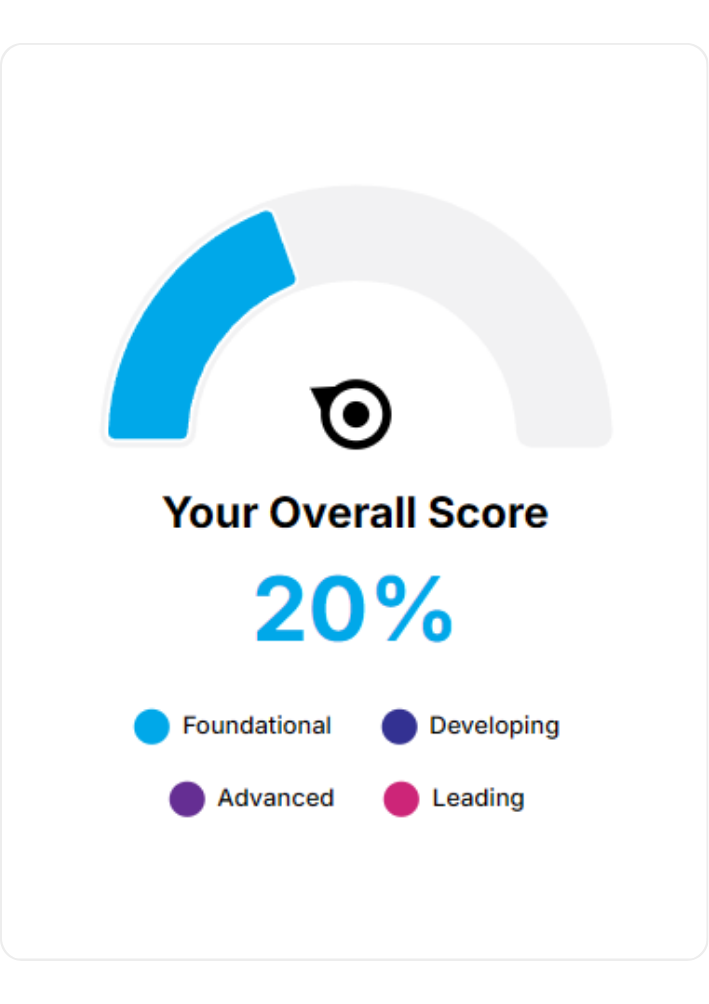
Impact measurement health check
How well are you measuring your impact? Take our FREE 5-min health check to find out