
Outputs vs Outcomes in Development Funding: Why this Distinction Matters
13th May 2026
5 min read
by Taru Bhargav

"If I gave you seeds today, I want to know whether you were able to use it to farm with it, or did you just eat them?"
That's Yar Deng's way of explaining outputs vs outcomes. Yar, who is an international development and humanitarian expert, has spent a decade working across both implementing and donor roles and states that the difference matters more than it might seem.
If you work in this sector, the distinction between outputs and outcomes is not new information. An output is an activity, such as the training delivered, the households reached, or the kits distributed. An outcome is what changed as a result of it. What's harder to articulate is why, despite that shared understanding, the gap between what gets delivered and what gets meaningfully measured keeps widening, and why right now, that gap is becoming more expensive to ignore.
The pressure to close it is no longer just rhetorical. Over the last decade, at least $25 billion of development spending has been tied to results, up from only a few billion in the decade before, with the World Bank Group, bilateral aid agencies, and national governments all moving in that direction. And while the trajectory is clear, what’s unclear is whether the systems and resourcing on the implementing side have moved at anything close to the same pace.
This article examines why the gap between output vs outcomes in development funding is structural rather than accidental, what it costs when coordination across partners is fragmented, and which assumptions built into how outcomes are funded consistently fail under real conditions, and what it would take to close them.
Why the gap persists despite everyone knowing better
While output data sits readily in training registers, distribution logs, and headcounts, outcome data requires something most teams are chronically short of, such as sustained field presence, dedicated monitoring and evaluation (M&E) capacity, and, in our opinion, the systems built for continuous tracking rather than end-of-cycle reconstruction. When implementation pressure hits and resources are stretched, the gap between the two becomes a practical reality long before it becomes a reporting problem.
Yar confirms this, "Once the implementation hits and you're overwhelmed with a lot of things, then you start to focus on the easy one to do, which is the outputs one. So they put the outputs, and now when you have to report, now you have to think about the outcome. You're like, oh my God."
The structural reasons for that are worth naming clearly:
- Measurement is chronically underfunded: M&E budgets across humanitarian and development programming typically sit between 3 and 5 percent of total project budgets, and frequently fall below that in humanitarian response contexts. That is the budget line responsible for producing the evidence donors are increasingly asking for.
- The donor landscape is fragmented, not unified: A KfW peer analysis found no standardised results-based instrument across bilateral donors. Implementing partners are navigating a landscape where every donor carries different verification standards and a different definition of what a demonstrated outcome actually looks like.
- The incentive structure still rewards outputs: As Yar describes it, "Donors are increasingly saying they want outcomes. But the structural incentives still point toward outputs. A government donor needs to justify its development budget to parliament or the public. Photogenic outputs communicate easily. Resilience indicators and behavioural change data don't make good press releases. This is changing.
She adds, “The sector as a whole is still catching up, and the mismatch between what donors say they want and what the reporting architecture rewards is a real source of confusion for implementing partners."
What that means in practice is that implementing partners are being asked to demonstrate a level of change they were never adequately funded to measure, against frameworks that vary significantly by donor, on timelines that rarely align with the pace at which real change actually occurs.
Coordination across partners, and what it does to outcomes tracking
The implementation drift described above happens within a single organisation working toward a shared goal. Now multiply that across five implementing partners, three donor frameworks, and two overlapping geographies, and you’ll quickly see how the problem scales in a way that makes outcome tracking not just difficult but architecturally impossible.
Each partner is accountable to its own donor's indicators, working to its own reporting timeline, using its own definition of what a demonstrated outcome looks like. There is no shared language across the response, and no mechanism for pooling evidence, even when individual partners are doing the measurement work. The result is that the output bias gets replicated across every workstream simultaneously, with no way to aggregate what's happening across the response as a whole.
Yar, who has seen this first-hand, mentions, "The Dutch will fund an agriculture project in a certain town, and then the Americans will fund a very similar project in the same town. No coordination among each other. Sometimes you find a beneficiary getting support, the same support from two different projects."
The consequence extends beyond wasted resources. A community's improved food security may be attributable to three overlapping interventions, but because each is reported against a separate logframe, to a separate donor, on a separate timeline, the system cannot show that. Outcomes that only become visible in aggregate through resilience, sustained behaviour change, and institutional capacity are precisely the ones that fall through the gaps between frameworks that were never designed to connect.
What gets in the way during a crisis
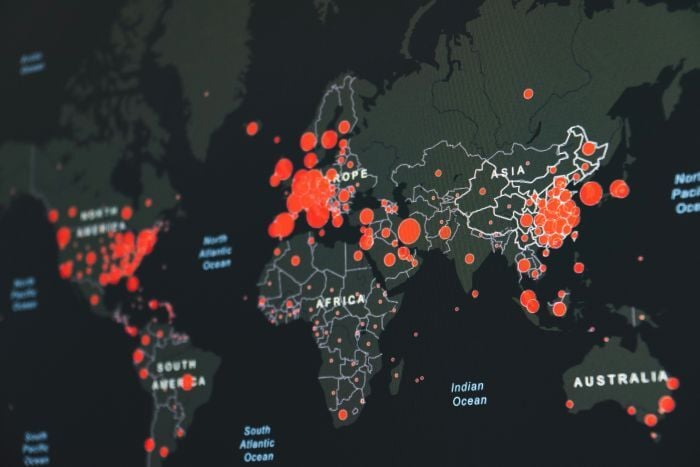
Everything described in the previous section assumes a relatively stable operating environment. In a crisis, those conditions don't change, but compress. When a rapid-onset emergency hits, the operational priority becomes speed. Getting resources to people, fast. In that environment, outcome tracking isn't deprioritised through negligence, but because the system was never built to sustain it under pressure.
In acute emergencies, agencies frequently have to act before full baselines or robust evaluation designs are even feasible, because delays carry their own humanitarian costs. The buffers that allow teams to manage the gap between output collection and outcome measurement in stable operations simply disappear.
The data bears this out. A WHO feasibility assessment conducted in Yemen found that only 44% of outcome indicators were deemed feasible for data collection in southern Yemen, with that figure dropping to 28% in the north. This is not a challenge unique to conflict zones; across fragile, conflict-affected, and vulnerable settings globally, M&E is consistently constrained by insecurity, fragmented implementation, weak data comparability, and short time horizons.
The Independent Evaluation Group of the World Bank has similarly noted that weak institutional arrangements, limited skills, and fragmented approaches routinely constrain the production and use of M&E evidence, a problem that crisis conditions accelerate rather than create, and one that program teams across the Asia-Pacific region and beyond will recognise as readily as those working in traditional humanitarian theatres.
Coordination, which was already fragile, becomes harder still. The cluster system exists precisely to provide a shared architecture during crisis response, bringing together implementing partners, UN agencies, and donors around common priorities.
In practice, as Yar describes it, "coordination is supposed to happen through cluster systems, but participation is often performative. People attend meetings but operate independently."
Each organisation continues to report against its own donor's framework, on its own timeline, against its own indicators. The structural fragmentation doesn't pause for the crisis.
There is a paradox worth naming. Crisis conditions force a reliance on local partners that stable operations rarely produce. When international staff cannot access an area, local organisations step in, and they frequently carry the deepest contextual knowledge, the longest community relationships, and the most reliable understanding of what change actually looks like on the ground. They often rise to the moment.
But that reliance rarely translates into lasting structural empowerment, and the institutional knowledge those partners hold rarely gets captured in any framework. When the acute phase passes and the funding cycle closes, it disappears with it.
The assumptions that don't hold
If you've read this far, a pattern has probably emerged. The same failures keep surfacing across different contexts — stable operations, multi-partner responses, crisis settings. That's rarely a coincidence. It usually means something structural is producing them. In this case, that something is a set of assumptions baked into how outcomes get funded and measured that feel reasonable at the design stage and consistently break down in practice.
So what are the premises on which funding systems are actually built, and how often do they hold? Two are worth naming directly, because they sit underneath most of what has been described in this article.
Reporting timelines align with change cycles
Most project cycles run three to five years. The changes that matter most such as behavioural shift, community resilience, and institutional capacity, take longer than that to appear, and longer still to verify.
When the measurement window and the change cycle are mismatched by design, the pressure is always to report what is visible within the window. Outputs. Outcomes become structurally harder to include even when they're real.
Partners have equal data capacity
Local partners are routinely expected to meet reporting requirements designed for organisations with full M&E units, regardless of the resources available to them. As she puts it, "The assumption that partners have equal data capacity — they don't. Local partners in particular are often expected to meet requirements designed for organisations with dedicated M&E units."
The system doesn't set them up to measure outcomes. It sets them up to report outputs, because that's what their resource allocation can actually support.
Both assumptions point to the same thing: outcome tracking was designed as a reporting function rather than a delivery function. Which raises the question of what it would look like to build it the other way around.
If outcomes need to be funded, the system has to support it
There is a thread running through everything described in this article, and it is worth naming plainly. The implementation drift, the coordination gaps, the crisis constraints, the assumptions that don't hold — none of these are the result of teams not caring about outcomes. They are the result of a system that was designed to report on outcomes rather than to track them. That distinction is small on paper and enormous in practice.
As Yar puts it, "You end up saying the project couldn't reach its outcome because they couldn't measure it properly. Not because it hasn't happened. It probably did happen. But it wasn't captured throughout the reports."
That gap between what happened and what was captured is where the sector's credibility problem lives. And it is a solvable problem… not through more reporting requirements, but through a different relationship between delivery and evidence.
Think of this as outcome indicators tracked continuously rather than reconstructed at the end. Visibility across the full funding lifecycle rather than at reporting milestones. Data that exists in one place rather than scattered across field offices and spreadsheets that nobody is checking until the deadline arrives.
"When systems are centralised, you can keep checking the data throughout the project cycle. You don't have to panic only when the report is due."
That shift — from outcome reporting to outcome tracking — is a design question as much as a resourcing one. It asks funders and implementing partners to agree, at the proposal stage, on what continuous evidence looks like and what it will cost to build it. It asks donors to fund M&E at a level that reflects what genuine outcome measurement actually requires. And it asks the sector to treat the gap between outputs and outcomes not as a reporting problem to manage, but as a systems problem to fix.
The team at Tactiv works with humanitarian and development organisations on exactly this — understanding where the system breaks down and what it would take to build outcome visibility into how programmes operate, not just how they report.
If that's a question your organisation is sitting with, we'd welcome the conversation.

Impact measurement health check
How well are you measuring your impact? Take our FREE 5-min health check to find out
.webp)